Ryta, founder and sole artisan behind Ryta’s Candle Co., is learning the power of localized content marketing for her digital storefront. Operating without a physical brick-and-mortar location means Ryta cannot rely on traditional foot traffic or a local Google Business Profile map pin. Instead, her growth hinges on building an inbound “pull” marketing strategy driven by organic online search traffic.
To turn search volume into revenue, Ryta has dedicated time to building a comprehensive content calendar covering a full 52-week cycle (one year). By mapping her business seasons, long-form content, and social media schedules directly to regional search behaviors, Ryta is transforming how her business connects with customers across Memphis and beyond.
1. Setting the Foundation: Business Goals & Revenue Mapping
Before drafting a single headline, Ryta had to clarify her overall business and revenue goals for the year. A content calendar isn’t just a list of dates; it is an execution tool for your business strategy.
Understanding her yearly revenue targets allows Ryta to:
- Align Content with Profitability: Focus content creation on high-margin candle collections during peak buying periods.
- Synchronize Channels: Use her primary content calendar to anchor paid media campaigns, organic social posts, and email marketing so every channel delivers a unified message.
- Refine Idea Generation: Brainstorm, vet, and filter content ideas through the lens of business value before investing time in asset production.
- Measure Impact: Track publishing dates against site traffic, email sign-ups, and sales conversions to evaluate whether her content calendar is actually driving business growth.
2. What Is a Content Calendar or Editorial Calendar?
While often used interchangeably, an editorial calendar and a content calendar perform two distinct functions within a small business marketing engine.
1. The Editorial Calendar (The Macro Strategy)
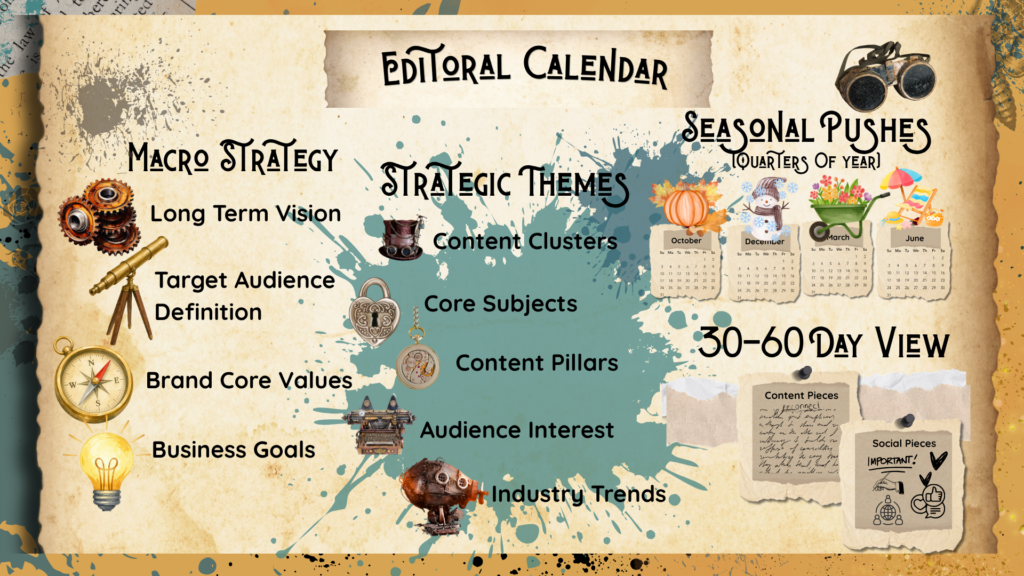
The editorial calendar is the high-level roadmap. It aligns broad marketing themes with business objectives, product releases, and major retail cycles over quarterly or annual horizons.
- Strategic Alignment with Business Seasons: Prevents last-minute scrambling by mapping marketing pushes 30 to 60 days ahead of key revenue periods (e.g., prepping fall or holiday campaigns during the summer).
- Intentional Resource Allocation: Allows owners to plan large-scale assets—such as long-form blog posts, video series, or downloadable guides—well in advance, fitting production smoothly around daily business operations.
- Topical Authority & SEO Structure: Organizes content into deliberate keyword clusters and pillars, ensuring the business systematically covers topics that build long-term search engine visibility.
2. The Content Calendar (The Operational Engine)
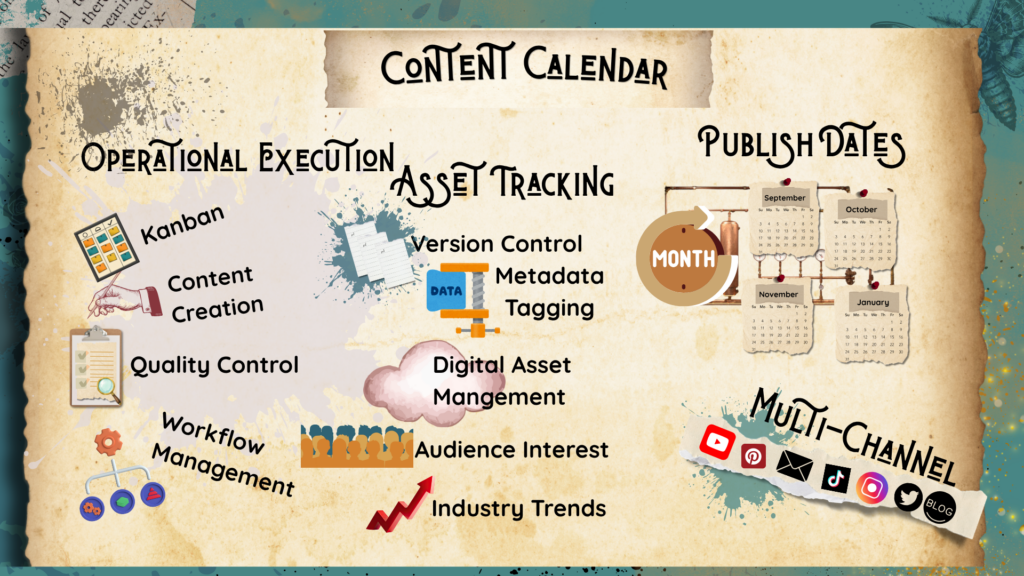
The content calendar handles tactical execution. It tracks the production lifecycle, delivery channels, and asset requirements for every piece of media.
- Consistency and Momentum: Establishes a regular publishing cadence, signaling reliability to both human readers and search engine crawlers.
- Workflow and Task Delegation: Centralizes production status (Drafting, Review, Approved, Scheduled) and assigns clear ownership.
- Asset Repurposing: Tracks multi-channel asset distribution, ensuring a single cornerstone piece (like a detailed guide) is systematically broken down into blog posts, email newsletters, and short-form snippets without duplicating effort.
3. The Social Media Calendar (The Micro-Distribution)
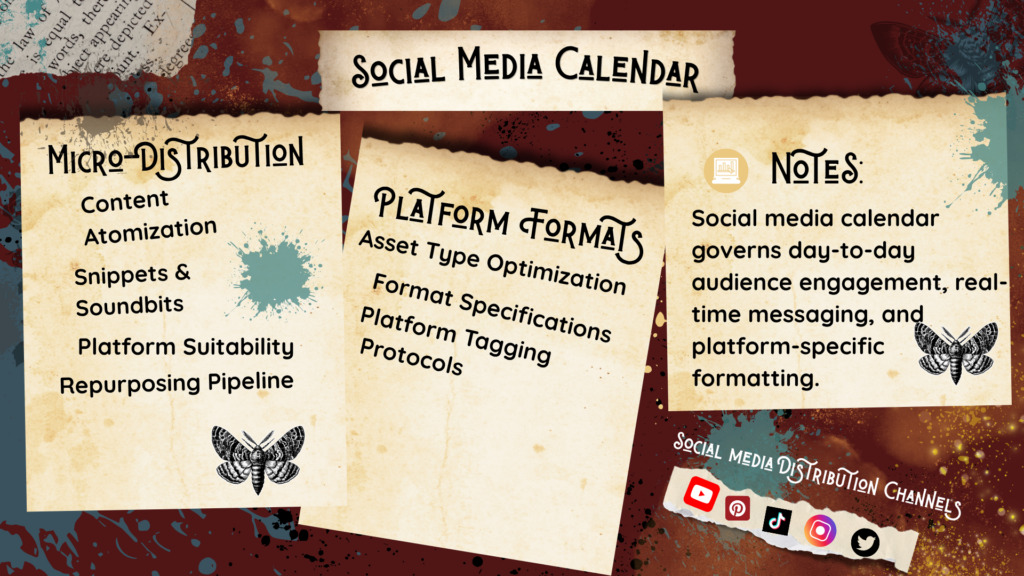
The social media calendar governs day-to-day audience engagement, real-time messaging, and platform-specific formatting.
- Optimized Timing and Automation: Facilitates batch-scheduling of posts at peak engagement hours across different platforms, freeing the business owner from manual daily posting.
- Platform-Specific Adaptation: Tracks tailored message formats (e.g., multi-slide carousels, vertical short-form video, text polls) to ensure content matches the native user experience of each channel.
- Real-Time Agility & Community Management: Provides a structured baseline of scheduled content, allowing owners the mental bandwidth to jump on trending local conversations or interact with customer comments in real time.
3. Why Use a Content Calendar to Plan & Strategize in Advance?
Hyper-Local & Cultural Nuance (The Memphis Market)
For digital-only or service-area businesses, content calendars act as local SEO footprint maps. By scheduling topics mapped to hyper-local search intent—targeting specific Memphis neighborhoods like Cooper-Young, East Memphis, Whitehaven, or Downtown—small business owners build domain and topical authority without requiring a physical shopfront.
Cultural SEO (“SEO for Humans”)
Search volume is more than numbers on a spreadsheet; it is rooted in regional culture and human behavior. Recognizing cultural context—such as local southern communities prioritizing harvest, autumn, and Thanksgiving home decor over scary themes—allows small business owners to pivot toward messaging that builds genuine trust and drives sales.
Scheduling: Setting Precise Publish Dates & Times
A well-structured calendar maintains the right Evergreen vs. Seasonal Content Ratio. It balances seasonal search spikes (e.g., fall candle queries) with evergreen local content (e.g., “Best Handcrafted Local Gifts in Memphis”) to prevent traffic drop-offs during off-peak months.
4. Multi-Channel Alignment for the Solopreneur
As a solo business owner, Ryta wears every hat—from master candle maker to copywriter, photographer, and ad manager. Realizing how much was on her plate, Ryta organized distinct promotional sub-calendars to eliminate overwhelm:
- Content Marketing Calendar: Anchor blog posts and long-form guides.
- Social Media Calendar: Short-form video, carousels, and behind-the-scenes content.
- Paid Media Calendar: Search and social ad campaigns timed around seasonal launches.
- Email Marketing Calendar: Nurture sequences, product drops, and VIP promotions.
- In-Person Craft Fair Calendar: Pop-up markets and local community events across Memphis.
Managing Workflow Today & Preparing for Tomorrow
Currently, having these schedules unified in one central system reduces Ryta’s day-to-day friction and decision fatigue. Looking ahead, as Ryta’s Candle Co. grows, this same system will serve as the exact blueprint she uses to delegate tasks to freelance writers, graphic designers, or a full-service agency—ensuring seamless brand consistency through every stage of growth.
5. How to Plan a Content Calendar: Ryta’s Candle Co. Case Study
Understanding Overlapping Business Cycles
One of Ryta’s biggest breakthroughs was realizing that her production timeline, content schedule, and sales cycles operate on completely different clocks. To capture organic search traffic when buyers are ready, her content marketing must lead her sales events by months.
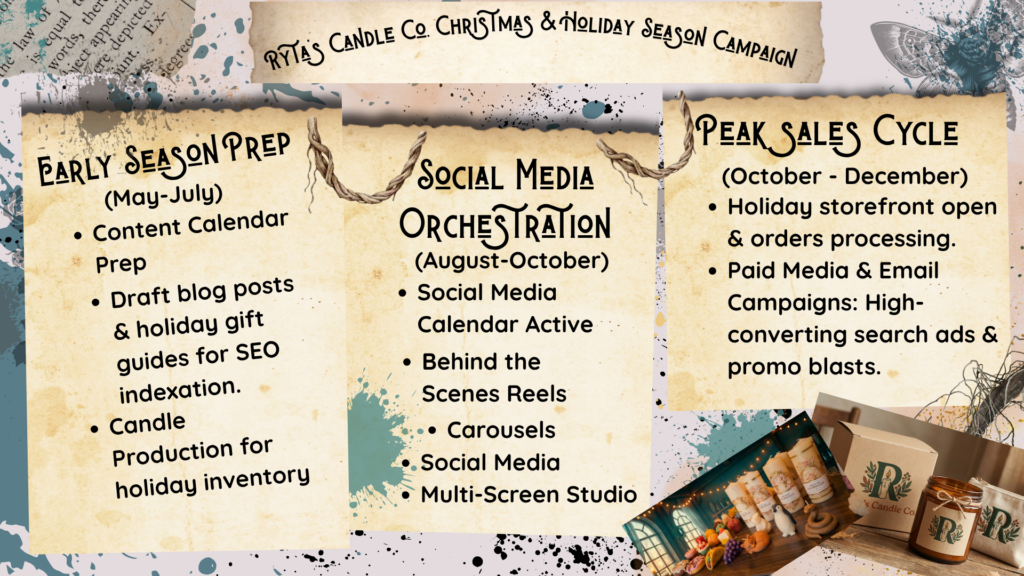
By planning long-form content 3–6 months ahead, search engines have time to crawl, index, and rank her articles before the peak search volume occurs.
6. Using Business Seasons to Plan Content & The Cultural Pivot
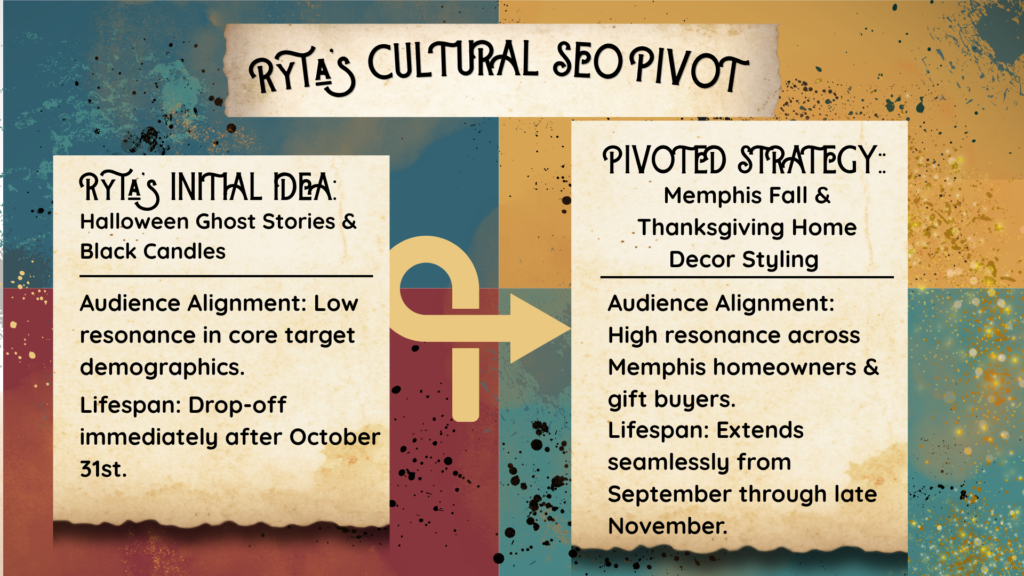
Ryta began planning her Fall and Holiday promotional push with an initial campaign idea: pairing her orange and black candles with scary Halloween ghost stories.
However, as she reviewed her target demographics across various Memphis communities and studied regional search behaviors, Ryta recognized a critical cultural nuance: in many traditional Southern communities, Halloween and scary themes hold limited appeal, whereas harvest, home styling, and autumn decor carry massive seasonal resonance.
The Shift to Fall Home Decor Trends
By pivoting to home styling, Ryta created a versatile content strategy with a longer shelf life and broader local appeal:
- Pinterest Trend Research: Ryta analyzed regional fall decor trends from the previous year, identifying popular color palettes, mantle styling ideas, and dinner table centerpiece trends.
- Neighborhood-Targeted Long-Tail Keywords: Instead of competing for generic terms like “fall candles,” Ryta mapped her product line to specific local home aesthetics across Memphis:
- “Cozy Fall Mantle Styling Ideas for Cooper-Young Craftsman Homes”
- “Warm Autumn Table Centerpiece Inspiration for East Memphis Dinners”
- “Handcrafted Fall Decor Ideas for Downtown Memphis Apartments”
7. Content Calendar Tools for Small Business Owners
You don’t need expensive enterprise software to run an effective content system. Ryta manages her entire marketing workflow using free tools within the Google Workspace ecosystem:
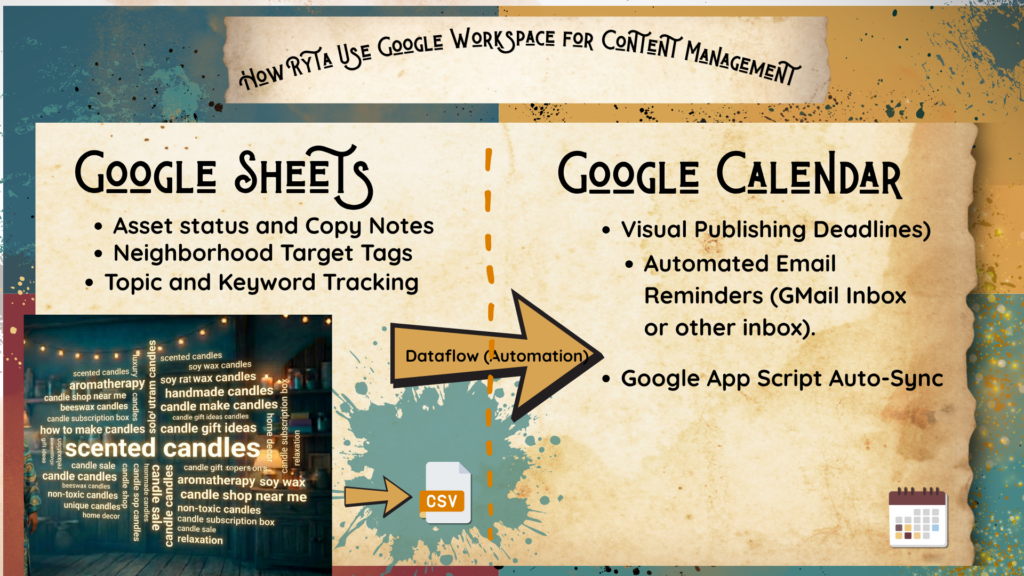
- Google Sheets: Serves as the primary content database to track keyword targets, status updates, image assets, and neighborhood tags.
- Google Calendar: Provides a visual timeline of upcoming publish dates and production deadlines, complete with notifications sent directly to her Gmail inbox.
8. Sample Google Sheets Content Calendar Layout
Here is how Ryta structures her master content planning tab in Google Sheets:
Publish Date Content Type Target Neighborhood / Keyword Cluster Headline / Working Title Asset Status Distribution Channels
Sept 05 Blog / Long-Form Cooper-Young / Fall Home Decor Cozy Fall Mantle Styling Ideas for Cooper-Young Homes Ready for Review Blog, Pinterest, Newsletter
Sept 12 Carousel / Social East Memphis / Harvest Tablescapes 5 Easy Steps to Style Your Thanksgiving Table with Hand-Poured Candles In Production Instagram Carousel, Facebook
Sept 19 Short-Form Video Downtown Memphis / Apartment Decor Over-the-Shoulder: Hand-Pouring Autumn Spice Candles in Memphis Concept Draft YouTube Shorts, Reels, TikTok
Sept 26 Blog / Long-Form Midtown / Local Handcrafted Gifts The Ultimate Local Memphis Harvest Gift Guide Outline Phase Blog, Email Blast, Paid Search
Download Your Free Local Content Calendar Template
Ready to organize your small business marketing and capture local search traffic? Download our free Cliively Digital Marketing Local Content Calendar Sheet with Google Calendar integration and email automations to keep you on track. Get a Google Gemini API key to use for AI writing assistance.
Get Your Copy of Cliively Digital Marketing‘s Free Google Sheets Content Calendar Template.