You have probably read dozens of generic marketing websites telling you to simply “create great content.” But “great” is completely subjective. What works for a corporate B2B firm in Germantown will fall completely flat for a neighborhood business in South Memphis, Whitehaven, or Orange Mound.
Great content isn’t a stroke of luck; it’s a repeatable process. This guide provides a practical, step-by-step framework to take your ideas from a messy brainstorming session to a high-ranking, trust-building blog post.
Table of Contents
- Why is Content Marketing So Hard?
- Phase 1: Discovery & The Ideation Process
- Phase 2: Architecture & Formatting
- Phase 3: Content Enrichment & Vision
- Case Study: Ryta’s Seasonal Pivot & Cultural SEO
- Phase 4: Intent Alignment & The Path Forward
- Phase 5: Technical Execution & Inbound Dialogue
- The Reality of the Brand Trust Paradox
- Actionable Commitment Checklist for Busy Owners
Why is Content Marketing So Hard?
Genuinely connecting with and understanding people’s deep desires, wants, and everyday struggles is incredibly difficult. As a small business owner, your most limited resource isn’t passion or ideas—it’s time. You aren’t suffering from procrastination; you are juggling operations, inventory, and life.
The ultimate goal of inbound content marketing is to create a “pull” strategy. This isn’t paid advertising. It is top-of-funnel content that naturally attracts people to your brand’s visibility in search engines, increasing organic website traffic without costing you a dime in ad spend.
Phase 1: Discovery & The Ideation Process
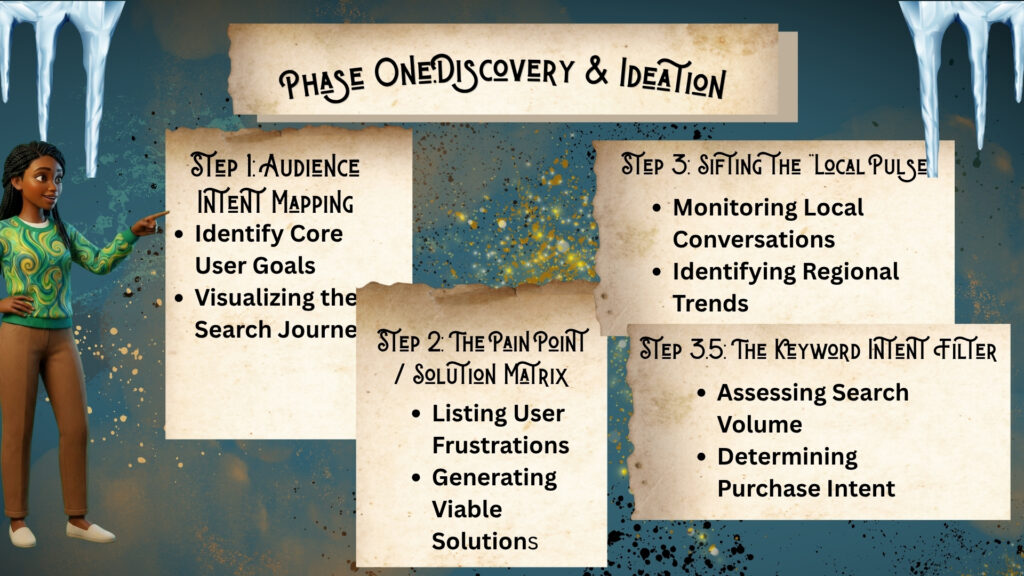
Step 1: Audience Intent Mapping
Never start writing by guessing what people want. Look at your daily operations and list the top 5 questions your customers actually ask you in person, via DM, or over email.
To map these to search intent, transform those questions directly into explicit blog post titles. For example, if customers constantly ask, “How do I keep my home smelling good without overpowering my guests?” your discovery-phase title becomes: How to Choose the Right Home Fragrance for Small Living Rooms.
Step 2: The Pain Point / Solution Matrix
To ensure every single piece of content serves a distinct business purpose, map out a clear matrix before touching a keyboard.
| Customer Pain Point | Your Specific Solution | The “Voice” & Vibe |
| Home feels cold and uninviting during holiday family gatherings. | Hand-poured, soy-blend fall candles with long burn times. | Warm, inviting, and deeply communal (Casual). |
| Gift-giving anxiety for corporate local clients in Memphis. | Locally sourced, curated autumn gift baskets with custom branding. | Professional, reliable, and sophisticated. |
Step 3: Sifting the “Local Pulse”
To dominate local SEO, you must master the “Listen and Respond” method. This means extracting topics directly from Memphis-based Facebook groups (like local neighborhood associations, Choose901 communities, or Memphis Black Businesses networks) and regional TikTok trends.
The Local Pulse Rule: Find a common, hyper-localized complaint or conversation thread, and write a dedicated guide on how your business uniquely solves that specific struggle.
Step 3.5: The Keyword Intent Filter
Before spending hours writing a brilliant article, you must validate the search query using keyword research. Use free tools like Google Trends and Google Ads Keyword Planner (which you can access completely free inside Expert Mode without running active ads). Filter your searches by setting the location strictly to the Memphis Metro Area. If Google Trends shows zero regional interest in your exact phrase, pivot the wording to match what real Memphians are actually typing into the search box.
Phase 2: Architecture & Formatting
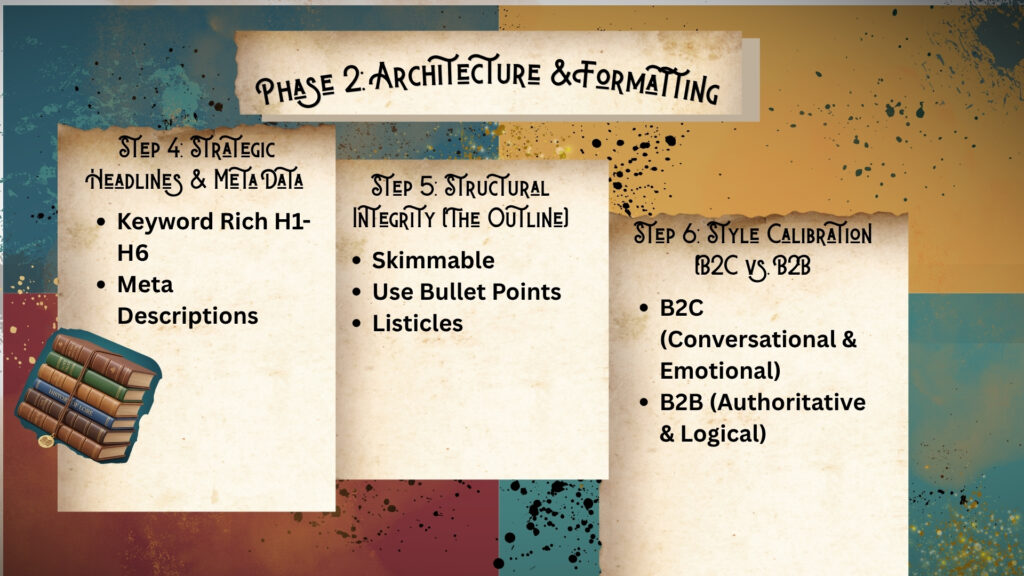
Step 4: Strategic Headlines & Meta Data
Your headline must strike a perfect balance between Search Intent (the technical keyword the algorithm needs) and Human Curiosity (the hook that makes a real person click).
- The H1 Title Tag: Needs to clearly feature your primary localized entity (e.g., “How to Decorate a Memphis Home for Fall”).
- The Meta Description: Think of this as your 150-character organic sales pitch. It should summarize the value of the post and end with a clear action prompt.
Step 5: Structural Integrity (The Outline)
Do not follow rigid, textbook writing formats. Let your content naturally dictate what the layout should be. However, to satisfy both human attention spans and algorithmic parsing, use a clean HTML header skeleton (H1 through H6) to map out readability.
- Requirement 1: Short, skimmable paragraphs (2–3 sentences max).
- Requirement 2: Bullet points or structured tables to break down complex data.
- Requirement 3: A highly flexible format type—like Listicles or “Best Of” style guides—which naturally capture attention and keep users scrolling.
Step 6: Style Calibration (B2C vs. B2B)
Calibrate your language based on who holds the checkbook. Trust is built differently across audiences:
- B2C (Conversational & Emotional): Focus heavily on experience and feeling. Use phrases like “How our home felt when the extended family walked through the door.”
- B2B (Authoritative & Logical): Focus heavily on ROI, efficiency, and seamless problem-solving. Speak to timelines, delivery bulk pricing, and corporate reliability.
Phase 3: Content Enrichment & Vision
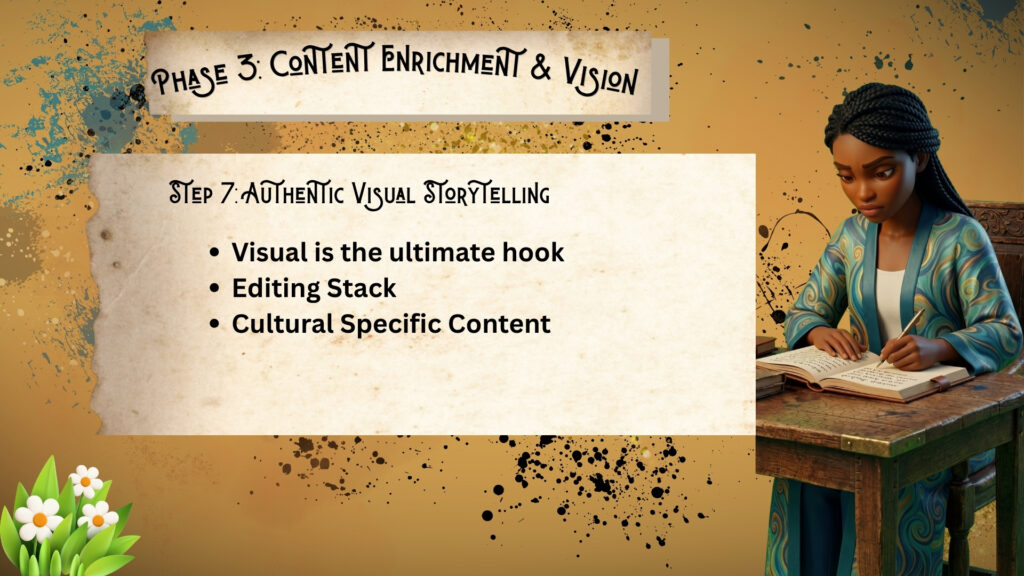
Step 7: Authentic Visual Storytelling
In modern local SEO, the visual is the ultimate hook. Algorithms and humans alike can spot inauthentic, sterile stock photography from a mile away.
The Visual Purpose Rule: Every image must serve a distinct purpose—either to illustrate a specific process, simplify a complex step, or show raw human authenticity (e.g., displaying your handcrafted candles burning inside an actual, recognizable mid-century modern living room in Midtown).
How to Create High-Quality Blog Visuals with AI & Open-Source Tools:
You don’t need a massive commercial studio budget. You can easily shoot high-end product photos using an affordable tabletop shotbox and your phone.
- The Editing Stack: Use open-source tools like GIMP for advanced desktop edits, or leverage paid tools like Canva’s background remover to isolate your products.
- AI Image Prompts: To generate unique background graphics or lifestyle settings for your blog, use precise visual styling prompts in your image generators.
[AI IMAGE PROMPT EXAMPLE]
"A high-contrast, warm lit, minimalist interior shelf styling, displaying a plain amber glass jar candle, cozy autumn home decor setup, shallow depth of field, photorealistic, light mode style"
Case Study: Ryta’s Seasonal Pivot & Cultural SEO
Let’s look at how a real Memphis business owner executes this exact strategy. Meet Ryta. She owns a local artisan candle line and wanted to plan her content using a free Google Spreadsheet Content Marketing Planning Template linked directly to her Google Calendar via her business Gmail account.
Originally, Ryta had her first content idea ready to go for October: pairing her seasonal black and orange candles with scary, local Southern ghost stories. It sounded fun, but as she began building out her content calendar, she applied the principles of Cultural SEO for Humans.
She realized that within certain deep-rooted communities in the South, Halloween themes and real-life scary stories are actively avoided due to cultural and religious preferences. Writing heavily about ghosts would alienate a massive portion of her ideal neighborhood audience.
The Pivot to Fall Decor & Long-Term Growth
Ryta quickly shifted her strategy. She logged onto Pinterest to research regional autumn decorating trends from the previous year. She completely pivoted her blog post calendar to focus on: “How to Style a Memphis Dining Table for Fall and Thanksgiving.”
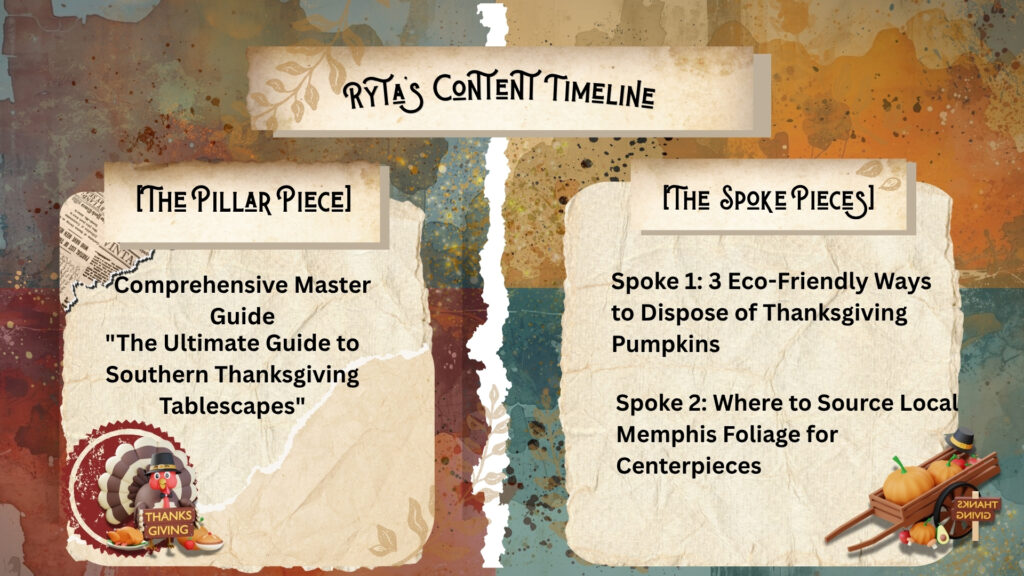
By shifting to an asset-based, long-term content strategy, her blog post doesn’t expire on November 1st. During seasonal spikes when local search queries rise for autumn decor, Ryta’s content surfaces as the most helpful, culturally aligned resource in Memphis.
Phase 4: Intent Alignment & The Path Forward
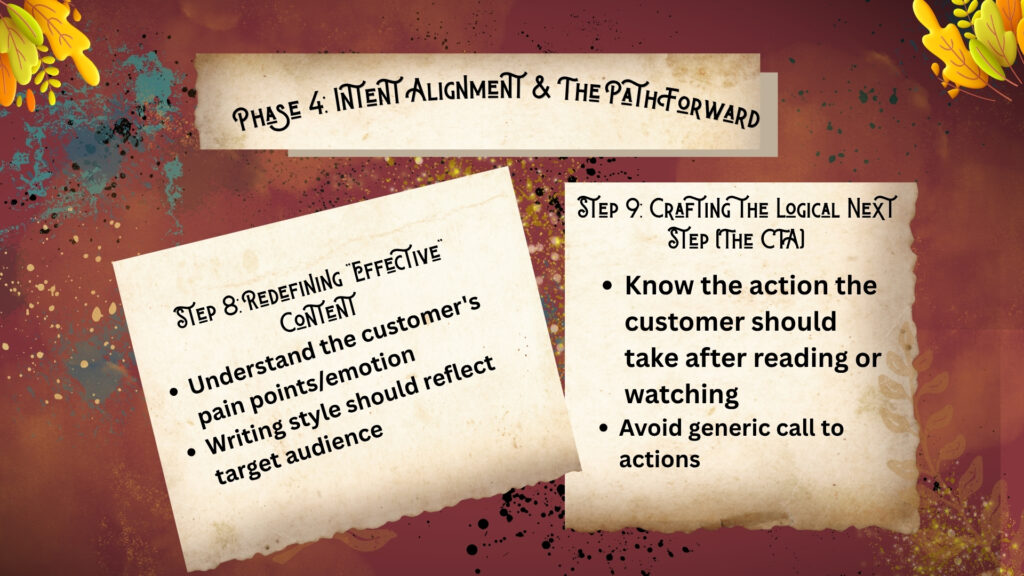
Step 8: Redefining “Effective” Content
An effective blog post does not simply drop data onto a page; it alters how your reader feels. When a person searches for a solution, they are usually experiencing an underlying emotion:
- If they are stressed or frustrated: Your writing style must be calm, clear, step-by-step, and authoritative to help them breathe.
- If they are curious or excited: Your writing should be bold, energetic, and highly actionable to invite immediate testing.
Your content aligns with search intent only when the reader leaves the page feeling significantly more capable and in control than when they arrived.
Step 9: Crafting the Logical Next Step (The CTA)
Once you have helped your reader transition from “Stressed” to “Capable,” you cannot leave them hanging at the bottom of the page. You must invite them into a deeper relationship with your brand.
Ask yourself: “Now that this person feels confident about this specific step, what is the next logical challenge they will encounter?”
- Do not just slap a generic “Buy Now” button at the end. Make your Call to Action (CTA) the exact answer to that next challenge.
- If Ryta’s post successfully teaches someone how to style a Thanksgiving table, her logical next-step CTA is: “Download our free checklist of non-toxic autumn scents to keep your holiday guests comfortable.”
Phase 5: Technical Execution & Inbound Dialogue
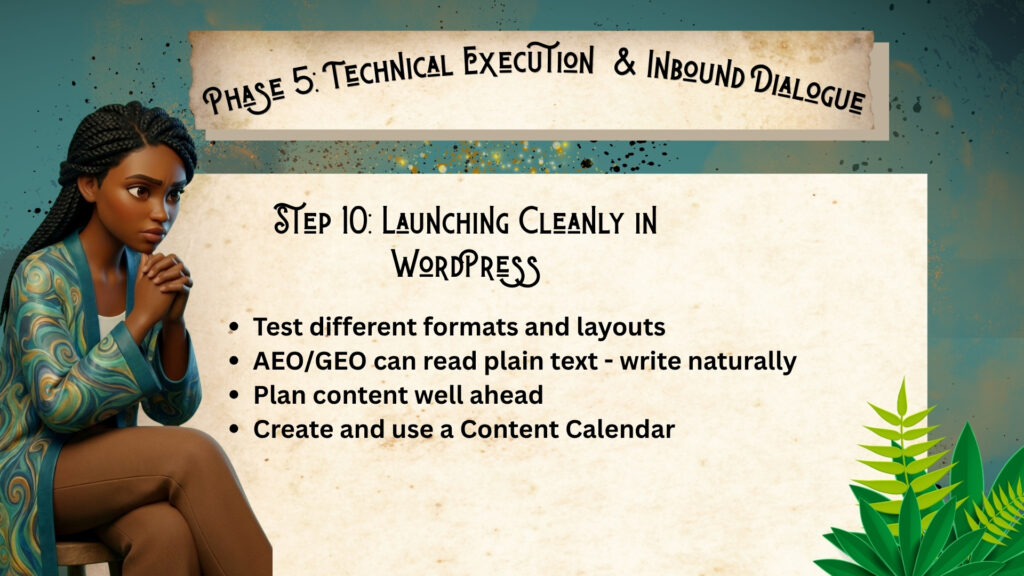
Step 10: Launching Cleanly in WordPress
When you are ready to publish your first post in WordPress, completely avoid rigid, legacy formatting blocks like hidden FAQ accordions.
- Lay your content out as natural paragraphs with clean, standard heading tags.
- BERT and modern AI search engines read plain-text structures effortlessly. Write cleanly for human scanning on the front end, and let your backend SEO plugin inject your structured data behind the scenes.
- Use a content calendar calendar to keep track of when to create and publish content.
The Dialogic Method: Handling the “Inbound Pull”
According to the 80/20 Rule, roughly 20% of your content assets will drive 80% of your customer conversions. Because inbound marketing relies on a authentic pull strategy rather than intrusive advertising, your job isn’t done when you hit “Publish.”
You must establish a continuous loop of listening and active communication:
- Engage with Intent: Monitor your blog comments, Google Business Profile reviews, and social mentions closely.
- Unify Management: To prevent getting completely overwhelmed as a busy solo executor, block out a single, focused 15-minute window on your Google Calendar every Friday morning solely to reply to community feedback across all platforms.
The Reality of the Brand Trust Paradox
Defining your ideal target audience is one of the hardest things you will ever do because localized branding relies heavily on human perception.
Consider this real-world example of a local service provider in Memphis. He realized that if he drove his highly professional, branded corporate work truck into Cordova, he closed deals easily. But if he took that exact same branded truck into neighborhoods like South Memphis or Whitehaven, his closing rates dropped significantly. Why?
The local residents of Whitehaven and South Memphis perceived the high-end corporate branding as an indicator of an overpriced, out-of-touch business. When he switched to driving a plain, unbranded white truck in those neighborhoods, his bookings spiked. The community perceived the plain white truck as a trustworthy, local “handyman” who offered fair pricing and accessible community service.
The Lesson: Both customer segments had the exact same plumbing or repair needs. However, their perception of “trust” and “authority” was entirely determined by the visual messaging. As a Memphis business owner, you must deeply understand how your local community perceives your visual brand presence before you can effectively write for them.
Actionable Commitment Checklist for Busy Owners
Silencing your inner critic is tough. That voice on your shoulder will constantly tell you that your writing isn’t perfect or that you don’t have the technical expertise. Remember: The only person looking for every tiny flaw is you. Consistency beats perfection every single time.
To build sustainable traction without running out of time, execute these core habits:
- [ ] Commit 10 minutes per day strictly to brainstorming and writing down customer problems.
- [ ] Publish 1 to 2 long-form blog posts per month—focus entirely on deep depth over daily volume.
- [ ] Repurpose your assets: If you find making videos easier than writing, shoot a quick 3-minute video explaining a tip. Then, use an AI tool or an implementation like Google Cloud Text-to-Speech or transcription tools to convert your spoken words into a clean text outline for your blog.
Let your authentic local experience guide the format. Speak directly to your neighborhood’s needs, keep your structure human-first, and let your local authority grow organically.
Want to read more about local SEO strategies for Memphis Business Owners? Join Cliively’s SEO BluePrint Newsletter.
Don’t forget to fill in the city and state. That’s how we bring you local SEO content ideas specifically for Memphis!
Not ready to subscribe to the newsletter? Watch Ryta’s Story journey with local SEO unfold on YouTube.