Today, you will learn how to create a local content marketing strategy that aligns with business goals and seasons. As the owner of Ryta’s Candle Co, Ryta has just started her journey to learn about local seo and localized content marketing. She has decided to commit 3 hours per week to writing blog posts in WordPress. But before she starts writing, she needs to plan the content and understand the elements of a good content strategy.
Table of Contents
- What Exactly is Localized Content Marketing?
- The Difference Between Content Strategy and Social Media Planning
- Crucial Local SEO Elements You Cannot Ignore
- How do you align a website’s localized content marketing strategy for the season?
- How do you align a localized social media plan with marketing planning with Seasons?
- Cultural SEO: Bridging Technical Jargon and Community Voice
- Conversational Phrases – Why It Matters in the Age of AI and Voice Search
- The Tools for Content Marketing
- Join The Local SEO BluePrint By Cliively Digital Marketing
What Exactly is Localized Content Marketing?
Before diving into the deep end of SEO, we have to define what we are actually doing. Content marketing is the practice of creating genuinely helpful articles, videos, and guides that satisfy a user’s needs, answer their specific questions, and build trust, rather than just writing fluff to trick search algorithms.
A content marketing strategy is your intentional roadmap. It connects the content you create directly to your actual business goals and revenue.

Understanding the “Push” vs. “Pull” Marketing Strategy
To grow your local business, you need to understand the difference between renting your audience and owning your audience.
Outbound Lead Generation (The “Push”)
Outbound marketing is a “push” strategy. This includes Pay-Per-Click (PPC) campaigns and Local Services Ads (LSAs), where you pay Google or Facebook to push your message directly in front of an audience. While this generates immediate traffic and leads, it comes with a major catch: the exact moment you stop paying for the ads, the leads completely stop. You are building your business on rented land.
Inbound Content Marketing (The “Pull”)
Inbound content marketing is a “pull” strategy. By using localized keywords and writing about specific community pain points, you naturally “pull” high-intent traffic from organic search engines, YouTube, and AI platforms directly to your website.
Why “Pull” Marketing Requires Long-Term Dedication
Unlike paid ads, inbound localized SEO is a marathon, not a sprint. It requires a serious dedication of time to write, format, and optimize content that Google actually trusts.
The 6-to-12 Month Timeline for Organic Growth
Real organic growth takes time. You can generally expect to see strong, measurable results in 4 to 6 months. In a highly competitive industry, it can take 6 to 12 months of sustained effort to dominate search results. Furthermore, it requires constant analysis: you must use free tools like Google Analytics 4 (GA4) and Google Search Console to track which content is working and which user behaviors are actually driving sales.
The Difference Between Content Strategy and Social Media Planning
It is easy to confuse content marketing with social media, but they serve two entirely different purposes in your localized SEO strategy.
Your Website is the “Hub,” Social Media is the “Spoke”
Social media platforms (like Facebook, Instagram, and TikTok) are distribution channels. Social media content planning focuses on generating engagement, likes, and brand awareness. However, social media signals are not direct ranking factors for Google Maps.

Your strategy should use your owned website content as the “hub”. You write one highly valuable, localized blog post on your website, then split that post into dozens of smaller social media “spokes” (like short-form videos or image posts). The goal of social media is to drive traffic back to your owned website, where you can capture their email address and build an audience that no algorithm can ever take away from you.
Crucial Local SEO Elements You Cannot Ignore
As you build your localized content, there are a few missing technical and trust elements you must incorporate to win over both humans and search engine bots.
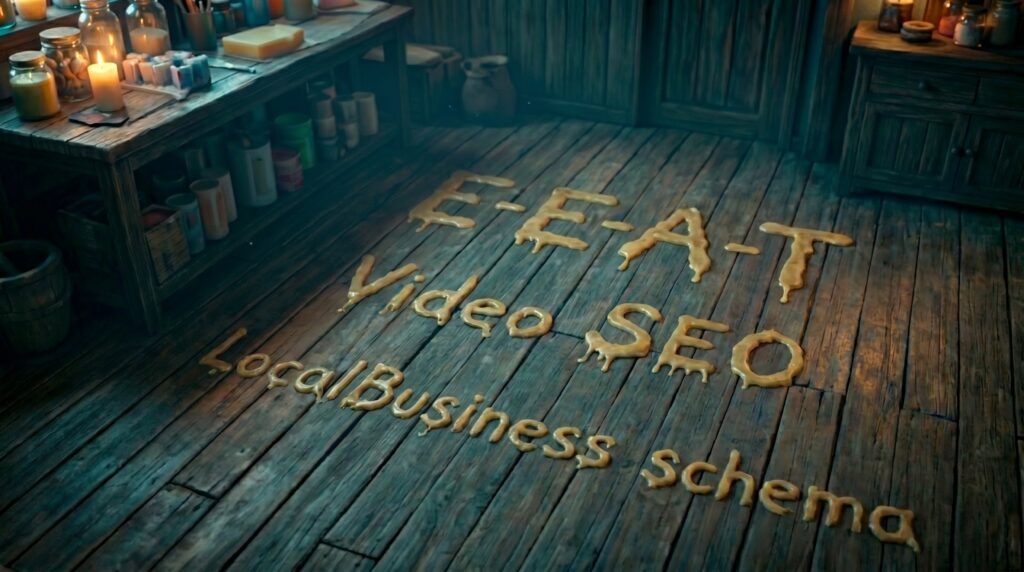
Building Human Trust with E-E-A-T
Google prioritizes content written by true local experts. You must embed human trust signals—like gathering local customer reviews and showcasing photos of real jobs you completed in specific Memphis neighborhoods—directly into your landing pages.
Video SEO and Dwell Time
Content marketing isn’t just text. Adding strategic, hyper-local videos (hosted on YouTube) to your blog posts increases the time users spend on your page. Search engines view this “dwell time” as a massive engagement signal, which can indirectly boost your visibility.
Feeding AI with Schema Markup
AI search engines do not read websites like humans do; they read code. You need to learn how to add the FAQ schema and LocalBusiness schema to your articles. This translates your written prose into structured data that AI engines (like ChatGPT or Google’s AI Overviews) can instantly read and use to recommend your business.
The Content Multiplication Playbook (Topics for Further Exploration)
Localized content marketing is a massive topic. Keep an eye out for our upcoming blog posts, where we will take a deep dive into these specific strategies:
- Spoke 1: Building Hyper-Local Landing Pages: Why linking a Google Business Profile to a generic homepage is a mistake, and how to write unique content for specific zip codes (like Frayser vs. Whitehaven).
- Spoke 2: Answer Engine Optimization (AEO) for Local Businesses: How to use conversational language and FAQ pages to capture AI search traffic and voice searches.
- Spoke 3: Building Digital Sovereignty: Why you must use lead magnets to capture email addresses and move your audience off of “rented” social media platforms
How do you align a website’s localized content marketing strategy for the season?
Ryta decided to align her website’s content marketing plan with her production cycle. For example, she will do keyword research and write the blog post in November, for a publish date on the website no later than the end of November. content? Ryta wants to be top of mind when people in Memphis start researching how to get rid of mosquitoes in their backyards. It also provides time to collect keyword data from Google Search Console on what potential buyers research online prior to buying.
The timing also helps the blog post gain traction in search engines. If the blog post isn’t ranking well enough to reach the first page, she has a few months to get it into the top 3 positions, preferably #1. Ryta may also run ads for Ryta’s Candle Co during the peak season, so having the keyword data will assist with Google Ads Campaign planning.
Attracting buyers is about gaining people’s trust. One way to do that is to showcase your expertise through your products or services.
How do you align a localized social media plan with marketing planning with Seasons?
Ryta’s has signed up for Cliively Digital Market’s newsletter abut local seo. The newsletter arrives weekly. (Free Content Planner Worksheet Coming Soon, so join the email list to get it when it’s ready!)
Ryta has decided to make her social media content plan coincide with her business’ sales cycles. Even though it’s fall, Ryta is in the middle of her holiday sale cycle for fall and Christmas-themed candles. Her production cycle for Christmas candles ran from April to September. She will create her social media and video content 1 -2 months before the season. She will start producing summer-related social media posts in February or early March.
Cultural SEO: Bridging Technical Jargon and Community Voice
Cultural Search Engine Optimization is probably one of the most overlooked strategies for connecting with people in a community like Orange Mound or Pinch District. “The true secret to modern SEO is combining human-centric helpfulness with ‘semantic clarity’ to build an owned audience.” You are probably asking me what that means.
Cultural SEO For Humans – Is Well, For Humans
Cultural SEO for Humans is the soul of your business. It means writing your website the way your Memphis customers actually talk. Instead of using stiff corporate words, you use the natural, conversational phrases your community uses when asking their phones a question. It means understanding the unique vibe of South Memphis versus Whitehaven, offering payment options your folks actually use, and honoring local traditions. It is about building real hometown trust, because human trust always beats bot trust.
Cultural Technical SEO Is For Search Engine Bots & AI
Right now, don’t worry about Cultural Technical SEO, as it applies more to brands that sell across the globe. This part is just to help you understand what it means.
Cultural Technical SEO is applying technical SEO to assist AI platforms and search engines to tell the difference between populations that look similar, but are vastly different. Search engines and AI models do not have life experience; they only read code. If you don’t tell the AI exactly who and where you are, it will lump you into a generic, nationwide bucket. Technical SEO uses hidden website code—called schema markup—to spoon-feed Google your exact Memphis location, what you sell, and who you serve. It acts as a translator, turning your authentic human culture into a language the robots can actually understand.
Conversational Search: Why Speaking Their Language Wins
Ryta is deeply ingrained in the South Memphis and Whitehaven community. Her business can’t compete against Bath and Body Works during the annual candle sale. But she can do as a small business owner in Memphis, experiment and sell new scents in her WooCommerce Store faster than a larger chain store. She can also get unfiltered direct feedback from her audience through reviews.
As a business owner, product feedback, comments, and reviews are a goldmine of information as part of her content marketing strategy. She is learning to tune in to what people most desire from their candles.

Example of How Writing To Be Found Makes A Difference – Writing for Search Intent
Writing (contextual information) is a big part of how Search Engines like Google decide if your content is any good. Most people believe YouTube can “watch” YouTube Videos to get context. This is partly true. YouTube algorithms can scan a video using Optical Character Recognition to extract text. The algorithms also use the video title, description, and tags to understand the video. The last thing YouTube does is transcribe the video into text to understand its full context. This matters for Ryta’s Candle Co., because the search pattern can vary. A user in Frayser may search YouTube for “how to make candles,” a top-of-funnel educational DIY search query. A user in Cordova may search on Google Search or Bing Search for “red and black candles for wedding” – which is a purely middle to bottom of funnel purchase intent search query.
Defining Your Small Business’s Writing Style & Voice
Content that reflects how her audience views her products is the most important way for her website to get shown to people in the Memphis area. She used conversational writing styles to reflect how her audience talks and searches.
Conversational Phrases – Why It Matters in the Age of AI and Voice Search
In 2026, you must write your content to match conversational phrases that reflect your audience. The sources reveal that the rise of Voice Search and AI Overviews (like ChatGPT and Google Gemini) has changed the rules of keyword research. Customers are no longer typing robotic keywords; they are speaking naturally to their phones, asking conversational questions.
If Ryta’s blog post explicitly answers the question to a user’s search , Google’s AI is far more likely to feature her article because it directly matches the natural, long-tail question phrase the user actually asked. By writing in the way your audience speaks, you are inherently optimizing for voice search and Answer Engine Optimization (AEO).
The Tools for Content Marketing
Keyword Planner Tools: To write for search intent, you have to stop guessing what your customers are typing and start using actual data. Professional SEO tools like Semrush, Ahrefs, and Google Keyword Planner allow you to uncover the exact keyword phrases your local audience is using. These tools are expensive; don’t worry about purchasing subscriptions right now. Your budget will thank you. These tools also fail to understand the actual local dialects of people in Memphis and the way Ryta’s audience actually searches.

But if you do decide to use these tools for local SEO, you want to filter your research to focus on two specific things:
- Search Intent: Filter your keywords to show “Commercial” (people researching brands or services) or “Transactional” (people ready to buy right now, with queries like “price” or “discount”).
- Local Pack Features: You can set advanced filters in tools like Semrush to show only search terms that trigger a “Local Pack” (the Google Maps result). This ensures you spend your limited time writing content for keywords proven to generate local visibility.
The Ultimate Free Tool: Google’s Own Search Bar If you are bootstrapping and cannot afford premium software, your best keyword research tool is sitting right under your nose. Start typing your product or service into the Google search bar and wait to see what the autocomplete suggestions populate.
After you hit enter, scroll down to the “People Also Ask” box or the “Related Searches” section. This is an absolute goldmine for Answer Engine Optimization (AEO). It shows you the exact, conversational questions your neighbors are already asking Google. Take those exact questions and make them the H2 or H3 headers of your blog posts and FAQ pages!
Content Optimization Tools (Semantic SEO) Search engines look for “semantic relevance”—meaning they expect an expert article about candle making to naturally include related words like “wax,” “wick,” “melt pool,” and “fragrance load.” Tools like SurferSEO or natural language processing (NLP) software can analyze your content and ensure you are including these closely related, semantic keywords to prove your topic depth to Google.
AI Content Assistants (Your Digital Intern) In the age of AI, you don’t have to stare at a blank page. You can use Large Language Models (LLMs) like ChatGPT, Perplexity, or Grok to brainstorm content topics, cluster your keywords, outline your articles, and even write your first drafts. However, there is a massive warning here: never just press publish on raw AI content. To win at local SEO, you must treat AI as a speedy assistant or an intern. Let the AI save you time on the typing, but you must heavily edit the draft to inject your unique brand voice, your human empathy, and your hyper-local Memphis references (like mentioning a delivery to Whitehaven or Cordova) to make the content truly publish-ready.
You are on your way to learning how to do local SEO with localized content strategies. But there is a catch: how does a small, virtual business actually get Memphis locals to leave those reviews in the first place? And how do those reviews convince Google to rank your business higher?
👉 How to Do Keyword Research For A Small Business : Want to find the exact, highly profitable phrases your Memphis neighbors are typing into Google? Read our complete, step-by-step guide to Local Keyword Research and Search Intent here.
Join Cliively’s newsletter: The SEO BluePrint, where we will send you weekly tips, tricks, and actionable worksheets to help you with SEO.